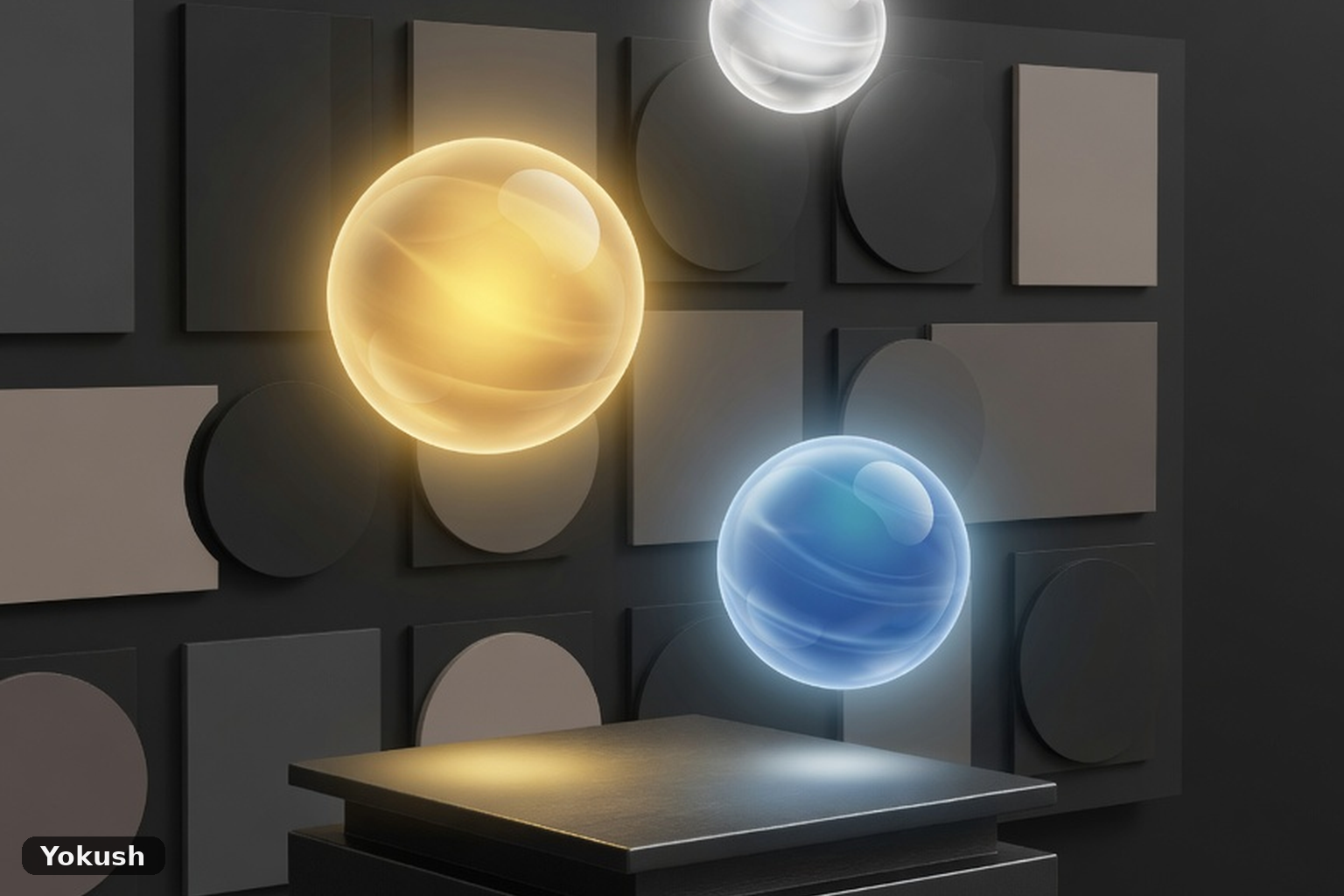
One lab names its models after celestial bodies. Another uses poetry forms. A third named something "Nano Banana." We are no longer buying software. We are choosing Hogwarts houses.
Somewhere between the launch of GPT-5.6 Sol, Terra, and Luna and the moment I realized Google's flagship image model is called Nano Banana 2, it became clear: AI model naming has crossed a threshold it cannot uncross. We are in the fantasy novel phase.
Consider the evidence. One lab ships models named Sol, Terra, and Luna — sun, earth, moon — as if each model variant is a celestial body in a proprietary solar system . Another lab has gone through Sonnet, Opus, and Haiku — poetry forms — and has now graduated to Mythos and Fable
. A third company apparently has something called Watermelon in development. Google dropped Nano Banana, then Nano Banana Pro, then Nano Banana 2 — a naming sequence that sounds less like a product roadmap and more like a produce aisle expansion plan
.
Meanwhile every press release still says "our next-generation multimodal reasoning architecture."
What's striking isn't that the names are whimsical. It's that each lab has committed to a consistent internal mythology — as if naming a model is a worldbuilding exercise, not a product decision. Here's the landscape as it stands in mid-2026:
There's actual method to this. The community has noted that literary naming — Haiku, Sonnet, Opus, now Fable under Mythos — is "more memorable and differentiating than the version-number soup that competitors use" . When you say "I'm using Sonnet," you immediately know the tier: short and fast, structured and capable, or the magnum opus. The name does the positioning work that a spec sheet used to do.
The celestial scheme follows the same logic. Sol is the flagship — the sun, the center. Terra is the workhorse — solid, grounded, reliable. Luna is the lightweight — fast, low-cost, orbiting at the edge . The metaphor maps cleanly to the product hierarchy. You don't need to remember "GPT-5.6-medium." You remember Terra.
But then there's Nano Banana.
Somewhere in Google's naming department, a decision was made to call their image generation model after a fruit. Not a prestigious fruit — not pomegranate or fig — but the most comedically basic fruit available. And then they shipped a sequel. Nano Banana 2. As if the first Nano Banana had a narrative arc that demanded continuation .
Naming conventions seem trivial until you realize they're a leading indicator of how these companies see themselves. The celestial lab is building a solar system — a complete, self-contained universe of models where each variant is a planet in a managed orbit. The literary lab is building a canon — a body of work with internal coherence, where each model is a form in an evolving tradition. The fruit lab is... having fun, apparently.
The deeper signal: these names are brand infrastructure. When models commoditize — and they will, as inference costs collapse and capability converges — the name becomes one of the few things you can't replicate. You can clone a model's weights. You can't clone the cultural association of "Sonnet" meaning "the thoughtful, structured one." That's a moat built from language, not silicon.
The naming arms race will intensify. As more labs ship more model tiers, the pressure to find untapped naming territory grows. We've already exhausted:
What's left? Minerals? Gemstones are partially claimed (Gemma, Crystal). Greek mythology is wide open — imagine the Athena model for reasoning, the Hermes for speed. Constellations haven't been fully exploited. Musical forms remain available: Nocturne for the lightweight, Concerto for the flagship, Fugue for the multi-agent orchestrator.
Or — and I'm just putting this out there — someone could name a model "Dave." Just Dave. The most powerful reasoning model on Earth, and its name is Dave. That would be the most disruptive naming decision in AI history.
None of this changes what the models do. Sol will reason. Sonnet will write. Nano Banana 2 will generate images of things that look almost but not entirely like bananas. The names are theater — delightful, absurd, occasionally brilliant theater — but the underlying capability curve is what matters.
Still, when the next model drops and it's called Phoenix, Dragonborn, or Enchanted Toast, remember: you saw the trajectory here first. The fantasy novel phase is just getting started. And the real question isn't what the next model can do — it's which house you've been sorted into.
Naming data sourced from public announcements and product documentation as of July 2026. No models were consulted in the writing of this piece. Probably.

Thoughts and essays, published with Yokush. See more posts
 Siddharth20 min1
 Siddharth13 min
 Siddharth
Comments 0